
The Role of CPET in Enhancing Diagnostic Skills
A Workshop on Cardiopulmonary Exercise Testing in Assessing Dyspnea

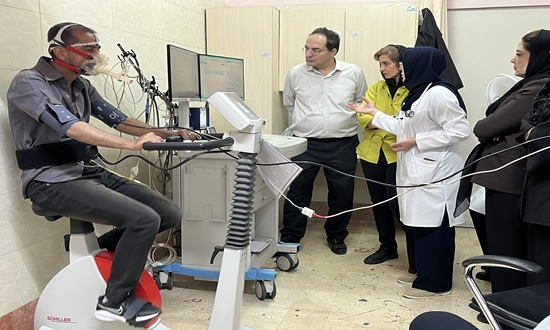
A recent workshop on Cardiopulmonary Exercise Testing (CPET) was conducted at Firouzgar Hospital, emphasizing the importance of enhancing physicians' skills in the systematic analysis of CPET findings. Dr. Mohsen Farrokhpour, a pulmonologist at the hospital, highlighted that precise interpretation of CPET results, when integrated with clinical symptoms, is crucial for selecting effective treatments for patients with reduced exercise tolerance or pulmonary vascular involvement.
The workshop, led by Dr. Shirin Izadi, a pulmonologist and faculty member at the Iran University of Medical Sciences, was one of 13 specialized sessions held during the 12th National Congress on Pulmonary Diseases, Sleep, and Critical Care. Organized as part of the Pulmonary Society’s educational initiatives, the session aimed to enhance physicians' knowledge and skills in assessing cardiopulmonary function and interpreting CPET findings. It took place in the Spirometry Unit of Firouzgar Hospital.
Importance and Application of CPET in Disease Diagnosis
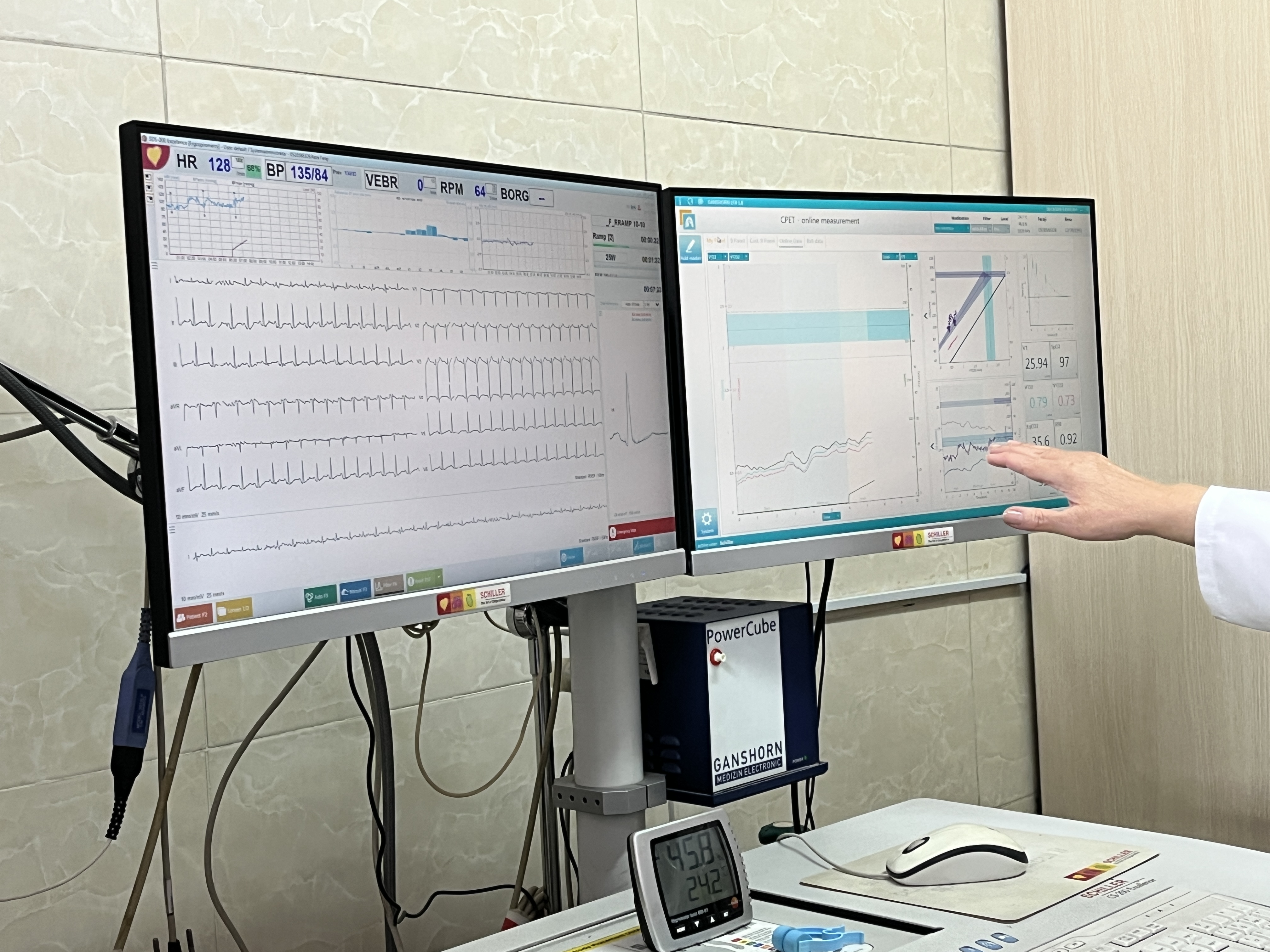
Dr. Farrokhpour elaborated on the significance of CPET, stating, "This test serves as a comprehensive method for evaluating bodily function during physical exertion. By assessing the cardiovascular, respiratory, and muscular systems simultaneously, it provides valuable insights into exercise capacity and the body's response to physical activity." CPET assists physicians in identifying factors that limit physical activity and enables a more precise assessment of a patient's functional status.
A key application of CPET is in evaluating patients with unexplained shortness of breath or reduced exercise tolerance. This method is particularly useful for assessing individuals with cardiac or pulmonary conditions, investigating potential pulmonary vascular involvement, and gauging a patient's functional response to treatment.
Dr. Farrokhpour emphasized that accurate interpretation of CPET results requires a solid understanding of exercise physiology principles, examination of various indices, and analysis of their interrelationships. Physicians must evaluate test findings alongside the patient's symptoms, medical history, and clinical condition to better understand the underlying causes of activity limitation and to determine the appropriate diagnostic and therapeutic pathways.
In conclusion, Dr. Farrokhpour stressed that training in test administration, analysis of key indices, and systematic interpretation of results can significantly enhance physicians' proficiency in utilizing CPET as a diagnostic tool. He noted that specialized workshops provide an excellent opportunity for exchanging scientific experiences and deepening understanding of CPET's clinical applications, ultimately facilitating more effective patient assessments.


comment